
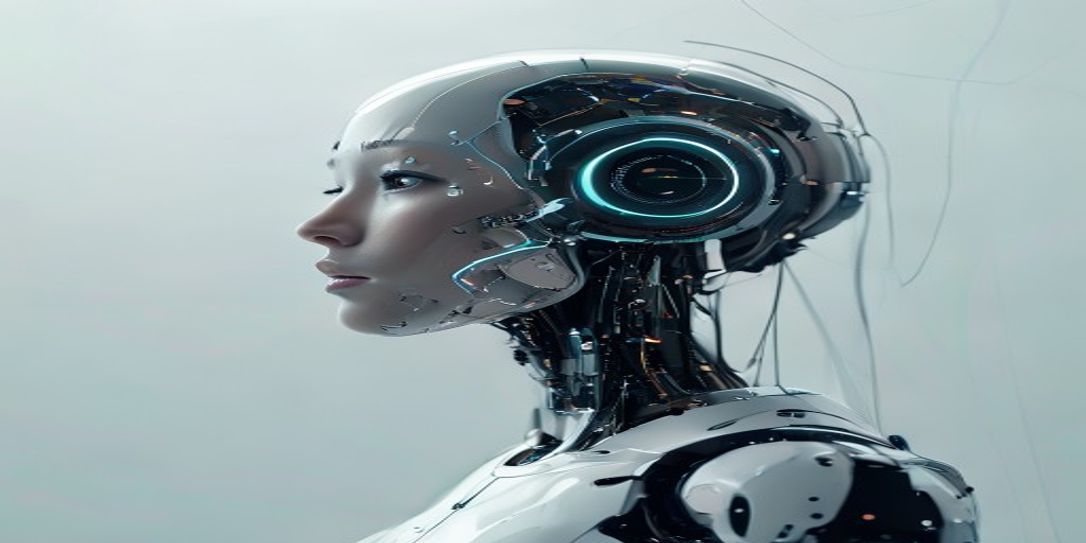
The narrative around artificial intelligence has long been dominated by a binary, dystopian debate: will AI create new frontiers of productivity or render human workers obsolete? However, a quiet but profound shift is occurring across industries, revealing a more nuanced reality. Companies are not mass-replacing employees with algorithms; instead, they are systematically augmenting human roles, leading to a fundamental redefinition of jobs, skills, and the very nature of work itself.
The Augmentation Imperative
Recent data from enterprise deployments shows a clear pattern. A major global consultancy's internal study found that AI tools, particularly large language models (LLMs), are being integrated into workflows to handle the "middle" of knowledge work—drafting, summarizing, data formatting, and initial analysis. This is freeing professionals to focus on high-value tasks like strategic decision-making, client relationship management, and creative problem-solving. The metric is shifting from hours logged to output quality and innovation.
"AI is not a replacement for thinking; it's a replacement for typing and formatting," notes Dr. Anya Sharma, a lead researcher at the Stanford Institute for Human-Centered AI. "We're observing the emergence of the 'AI-augmented professional,' whose value lies in their judgment, ethics, and ability to guide and refine AI output."
The New Skillset: Prompt Engineering and AI Whispering
This transformation is birthing entirely new competencies. "Prompt engineering" has moved from a niche technical skill to a core professional literacy. The ability to communicate effectively with AI systems to produce desired outcomes is becoming as fundamental as spreadsheet proficiency was a decade ago. Beyond this, critical skills like source verification, bias detection, and synthetic data oversight are rising in demand.
A report from LinkedIn's Economic Graph indicates a 75% increase in job postings referencing "AI collaboration" or "augmented intelligence" skills in the last quarter alone, even as mentions of outright "AI replacement" remain flat.
The Infrastructure Bottleneck
The revolution is not happening uniformly. The primary barrier is no longer the AI models themselves, but the legacy infrastructure into which they must be integrated. Many enterprises are struggling to connect powerful new LLM APIs with decades-old databases, internal software, and siloed data systems. The real battle is in the middleware, data pipelines, and security layers required to make AI both useful and safe at scale.
This bottleneck has sparked a gold rush in enterprise AI integration platforms. "The model is the engine, but integration is the chassis, wheels, and steering wheel," says Mark Chen, CEO of integration startup SynthFlow. "Without it, you have raw power with no way to direct it safely."
The Unanswered Ethical Questions
This augmentation wave brings urgent ethical questions to the fore. If an AI-augmented employee produces ten times the output, who owns the intellectual property? How is performance measured when work is a human-AI collaboration? Furthermore, the risk of automation bias—over-reliance on AI suggestions—poses a significant threat to quality and accountability.
Regulatory bodies in the EU and the U.S. are beginning to draft guidelines not just for AI development, but for its managerial and operational use within the workplace, focusing on transparency and human oversight mandates.
Looking Ahead: The Hybrid Workforce
The future taking shape is one of a hybrid workforce. The most successful organizations will be those that invest as much in change management and continuous learning as they do in AI licenses. The goal is no longer to build a fully automated corporation, but to create a symbiotic environment where human intuition and machine-scale analysis co-evolve.
The silent shift is clear: AI’s most immediate impact is not on the number of jobs, but on their substance. The question for every professional and company is no longer if AI will change their work, but how they will adapt to harness this powerful augmentation. The era of human-AI collaboration has begun, and it is rewriting the job description for an entire global economy.