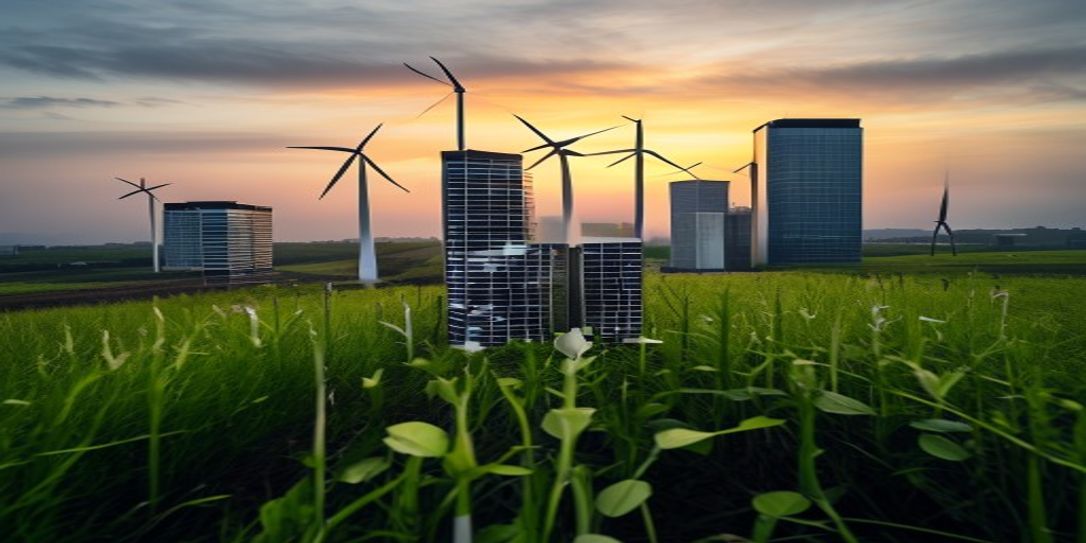
While headlines tout AI's potential to revolutionize everything from healthcare to climate modeling, a less-discussed reality is emerging: the staggering energy consumption required to power the artificial intelligence boom. As tech giants race to develop larger, more complex models, the environmental and infrastructural costs are coming into sharp focus, forcing a critical industry conversation about sustainability versus capability.
The Scale of the Demand Recent studies indicate that training a single large language model can consume more electricity than 100 U.S. homes use in an entire year. Furthermore, the operational energy—the "inference" phase where models answer user queries—multiplies this demand exponentially. With billions of daily interactions across chatbots, search assistants, and image generators, data center energy use is projected to double by 2026, with AI being a primary driver.
The Industry's Response: Efficiency vs. Expansion The response from leading AI firms has bifurcated. Some, like Google and Microsoft, are investing heavily in optimizing algorithms and developing specialized, energy-efficient chips. They argue that AI itself will become a tool for managing complex energy grids and accelerating green technology research.
Conversely, the prevailing trend remains toward creating ever-larger "frontier models." OpenAI's GPT-4 and its successors, along with competitors like Anthropic's Claude and Google's Gemini, follow a scaling law that predicates improved performance on increased parameters and computational power—a direct trade-off with efficiency.
The Search for Sustainable Solutions Innovation is targeting multiple fronts:
- Specialized Hardware: Companies like NVIDIA and startups are designing AI-specific processors that deliver more computations per watt.
- Model Architecture: Techniques like "mixture of experts" (MoE) aim to activate only parts of a model for a given task, reducing computational load.
- Renewable Energy Commitments: Major cloud providers pledge to power data centers with carbon-free energy, though grid reliability often forces reliance on fossil fuels as backup.
- The Small Model Movement: Some researchers advocate for a shift towards smaller, finely-tuned models for specific tasks, which can dramatically cut energy use while maintaining performance in targeted domains.
The Regulatory Horizon Governments are beginning to take note. The European Union's AI Act includes requirements for transparency around the energy consumption of large models. In the United States, proposed legislation could mandate energy reporting for data centers. This regulatory pressure may soon make an AI model's carbon footprint a key metric alongside its benchmark scores.
The path forward remains contested. The industry stands at a crossroads between the relentless pursuit of more powerful, general-purpose AI and a more measured approach that prioritizes computational sustainability. The outcome will determine not only the trajectory of artificial intelligence but also its tangible impact on global energy infrastructure and climate goals.