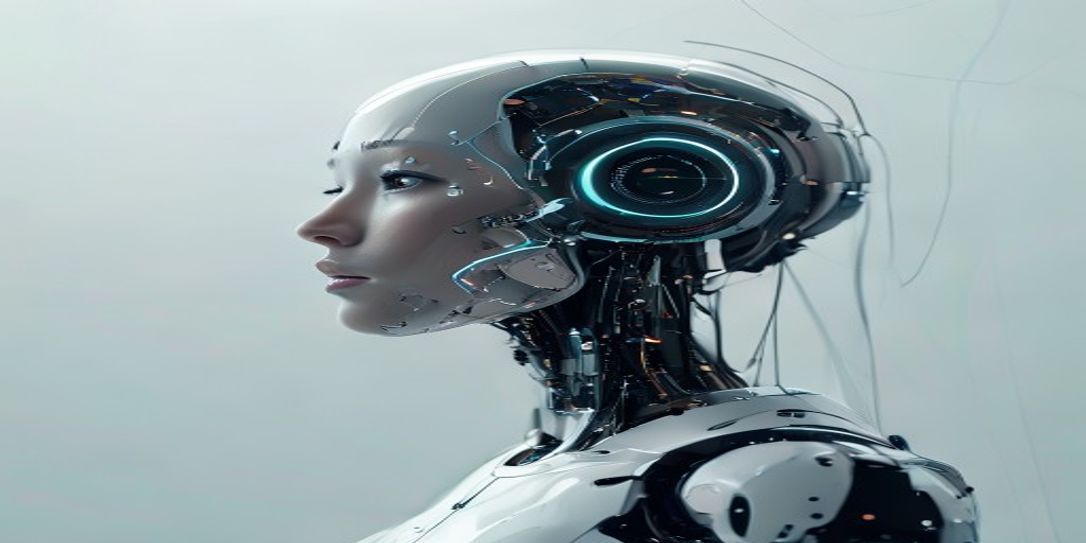
The narrative around artificial intelligence has long been dominated by a binary, dystopian debate: will AI create new frontiers of productivity or will it render human workers obsolete? A new wave of data and corporate case studies suggests the reality is more subtle, and perhaps more revolutionary. The most significant impact of generative AI and advanced automation is not mass layoffs, but a profound, silent redefinition of work itself.
For the past year, companies from consultancies like McKinsey to tech giants like Microsoft have been conducting large-scale internal experiments. The findings consistently show a pattern not of replacement, but of acceleration. A recent study by the MIT Work of the Future initiative found that AI tools are primarily being deployed to handle repetitive, time-consuming tasks—code documentation, initial draft creation, data synthesis, and meeting summarization. This is leading to what economists are calling a "competence expansion," where individual contributors can operate at a scope previously reserved for more senior roles.
"We are not seeing the 'one AI, one job' displacement that was feared," explains Dr. Anya Sharma, a lead researcher at the Stanford Digital Economy Lab. "Instead, we're observing a phenomenon where AI acts as a force multiplier for skilled professionals. A software developer can now manage more complex systems, a marketer can personalize campaigns at an unprecedented scale, and a financial analyst can model dozens of scenarios in an afternoon. The job title remains, but the day-to-day work and required skills are transforming."
This shift is driving a quiet but urgent reskilling race. Corporate learning platforms report a 300% year-over-year increase in enrollment for courses like "Prompt Engineering for Professionals," "AI-Augmented Decision Making," and "Human-in-the-Loop System Design." The most valued employees are becoming those who can effectively partner with AI, directing its capabilities and interpreting its outputs with critical human judgment.
However, this transition is not without its fractures. The pressure to continuously adapt is high, and the benefits are not yet evenly distributed. A digital divide is emerging between "AI-augmented" knowledge workers and frontline roles where such tools are less applicable. Furthermore, the expectation for increased output—the "productivity paradox" of new technology—is leading to concerns about burnout and the blurring of work-life boundaries.
The legal and ethical frameworks are scrambling to catch up. Questions about intellectual property for AI-assisted output, liability for AI-informed decisions, and data privacy within training pipelines remain largely unanswered by current legislation.
The conclusion from the frontlines of this integration is clear: the AI revolution is not a headline-grabbing story of robots taking over. It is a quieter, more pervasive story of human work being fundamentally reshaped. The challenge for businesses and societies is no longer just about adopting technology, but about managing this great acceleration—ensuring it leads to broad-based prosperity and not a new era of inequity. The future of work is not human versus machine, but a complex, evolving partnership where the very definition of "work" is being rewritten in real time.